
In Review: Primate, Paying For It
Two very different films that highlight the need to adapt.

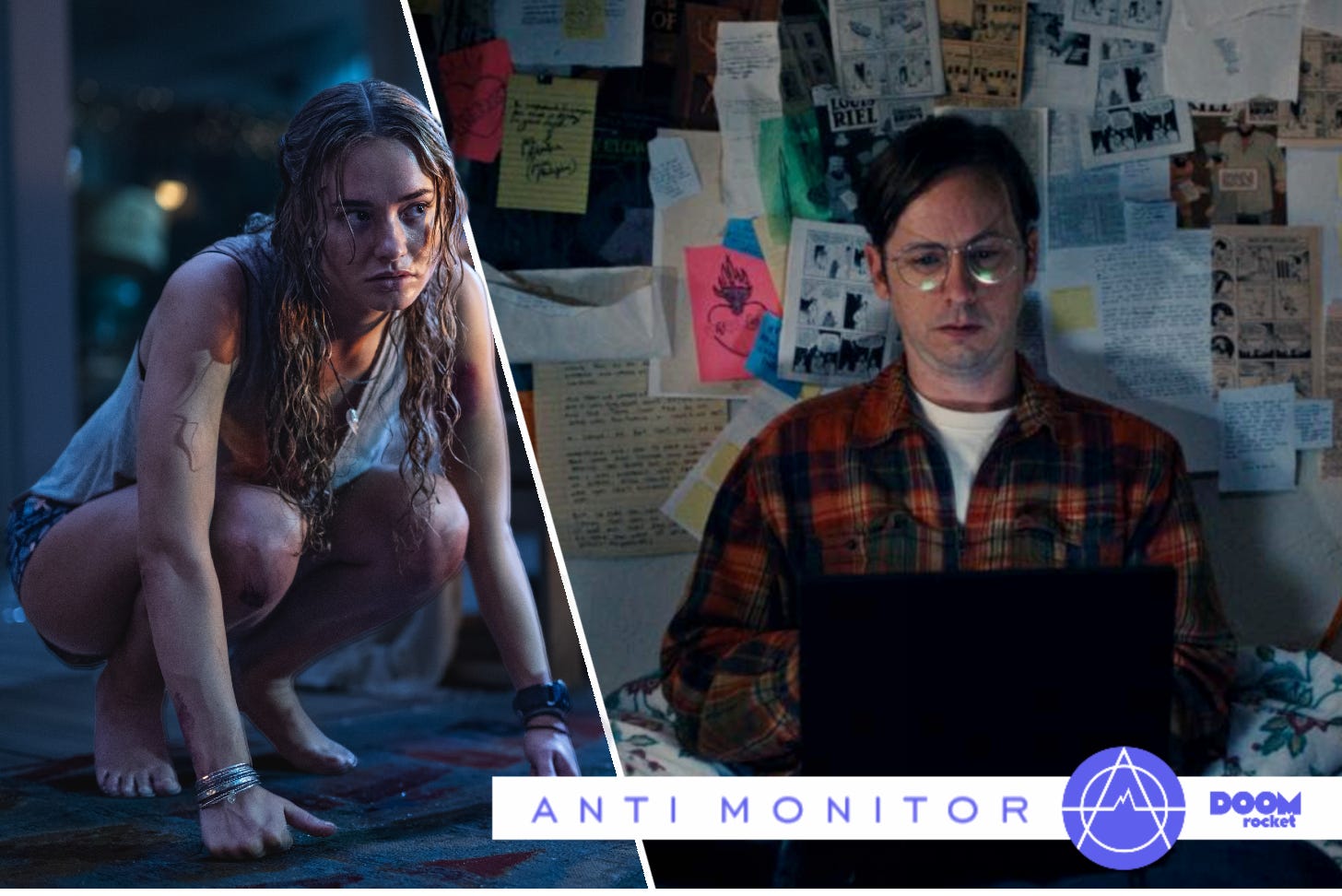
PRIMATE
As his mid-budget horror career has progressed, Johannes Roberts has refined one of the genre’s most economical premises into a dependable go-to formula: the closed-location creature feature. His tightly constructed setups, as seen in chomp-’em-ups like Storage 24 and the 47 Meters Down series, gather a group of attractive faces for a night of horrors that, while not always especially memorable, are reliably entertaining in the moment. His latest, Primate, may feature his smallest slaughterhouse yet. Set almost entirely around a cliffside swimming pool in Hawaii, the film introduces an especially unusual nemesis to keep its cast hostage: a rabid chimp named Ben.
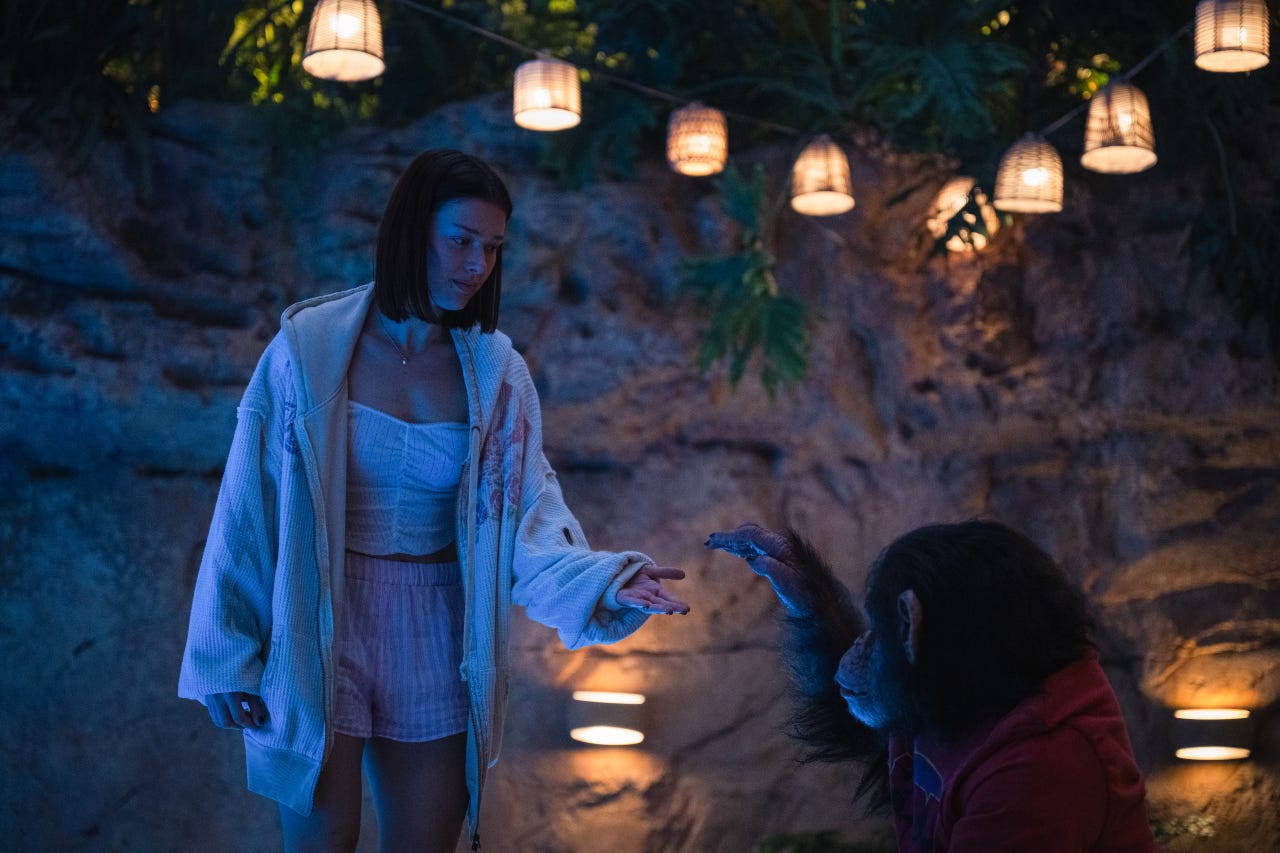
Like all decent killer-animal movies — Alexandre Aja’s Crawl and Jaume Collet-Serra’s The Shallows spring to mind — Primate relies on the claustrophobic terror of a relentless animal encounter and gets creative with its brand of beastliness. It stands out most through the initially affectionate nature of Ben, who wears a red T-shirt, snuggles a teddy bear, and communicates in American Sign Language with his human family. A sweetheart — at least, until he goes bananas. Ben is brought to life by Miguel Torres Umba, who, in a mostly convincing practical suit, leads the ensuing chaos with chest-thumping brio. Luckily for the people in this story, while chimps are incredibly strong — as Primate cheerfully demonstrates during its most gruesome moments — they can’t swim; naturally, Roberts wrings every bit of tension from baleful Ben as his victims-to-be tread water, desperate to escape his furry clutches.
Before the bloody monkeyshines, though, we must sit through the preliminaries: There’s Lucy (Johnny Sequoyah), who returns home to her novelist father (CODA’s Troy Kotsur) and younger sister Erin (Gia Hunter), accompanied by bestie Kate (Victoria Wyant), studly Nick (Benjamin Chen), and adversarial Hannah (Jessica Alexander, who pops up later this month in FX’s The Beauty). Lucy’s homecoming, the film hints, is charged with obligation — her mother, a famous animal linguist, has died of cancer, leaving dad distracted and overworked, and Erin isolated — but the company on this trip is mostly agreeable, and there’s the family pet to keep things lively. That’s Ben, the smart chimp Lucy’s mom kept at home like a domesticated Jane Goodall experiment.
We learn, during a jarring opening sequence that jumps forward in time for a cheap shock, that Ben has been bitten by a rabid mongoose. He escapes his pen, the fur soon flies, and Lucy and her friends stake out their one advantage against their pursuer in the family pool. Roberts tightly frames his constricted spaces to amplify the tension, giving Ben the uncanny aspect of a slasher villain like Michael Myers or Scream’s Ghostface. And, like Scream, Primate can’t resist milking laughs from its own absurdity; one doomed character voices the audience’s most reasonable question: “Who the fuck has a chimp for a pet?”
It’s a fair question, all things considered — particularly if Ben’s killing spree has survivors, which might land Lucy’s dad in legal hot water — though Roberts, working with co-writer Ernest Riera (47 Meters Down), at least gestures toward a justification. Ben was important to Lucy’s mom. He’s family, which makes his violent turn all the more tragic for her.
This drama should lend weight to the mayhem, but whatever emotional heft the film hints at quickly gives way to crowd-pleasing carnage. Given Ben’s connection to Lucy’s late mother, one might expect some catharsis in her inevitable showdown with the chimp: being wounded by Ben could be seen as a horrifying extension of her mother’s work; as such, harming him could be a symbolic betrayal of her memory. At a trim 90 minutes, Primate has little patience or even curiosity for that kind of introspection. If nothing else, at least it commits to the shocks. On those terms, it overdelivers, providing January audiences exactly the kind of genre ridiculousness for which they braved the cold. Primate is smart enough not to make a monkey out of them.
6 / 10
Primate is in wide release this Friday.
Directed by Johannes Roberts.
Written by Johannes Roberst and Ernest Riera.
Starring Johnny Sequoyah, Jessica Alexander, and Troy Kotsur.
89 mins. / Rated R. Ben does stunningly violent things to the human body.
PAYING FOR IT
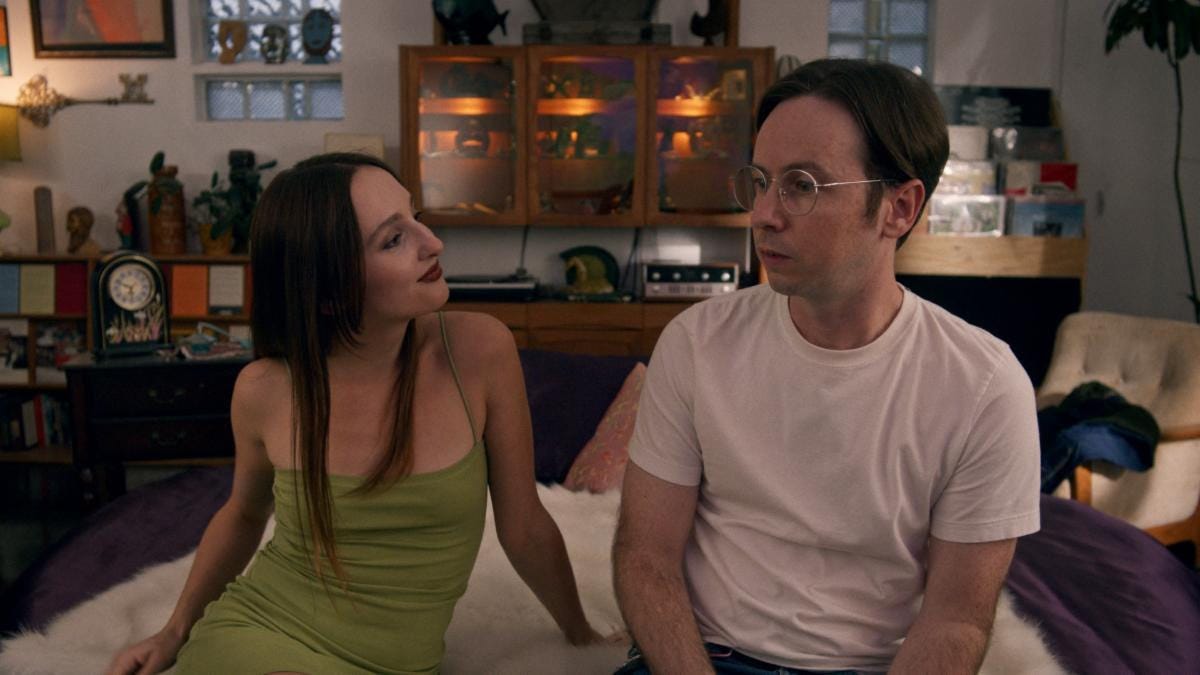
There are two versions of Paying for It: one from Chester Brown’s experience, and one from Sook-Yin Lee’s. The two were a monogamous couple in the late Nineties, when Brown’s autobio-comic odyssey — about breaking up but sharing space, feeling single and horny, and finding contentment with sex workers — began. Lee’s request to alter her and Brown’s relationship to pursue romance with someone else, as Brown kept living in her house, is the inciting incident for Paying for It and, apparently, the moment that further enriched them as people. Clearly, as Lee has adapted Brown’s comic account of these events to film, the two remain close. (We even see Brown’s hands arrange the title cards, and the interstitials and credits feature his indelible line.)
When you hear about relationships like this, if you’ve never experienced one like it, the impulse is to think, “Good for them, and none of my business.” But we can’t help but poke our noses in, can we? I mean, these kinds of relationships are fascinating and fun to gossip about — from an outsider’s perspective, they can be seen as messy, and schadenfreude, if we can be honest with each other, is a dish everyone indulges in. Messy is easy drama, but drama told well, with humor and honesty — that’s what makes good movies.
Paying for It is a good movie. Visually and functionally, it resembles another adaptation of an alternative comic strip, Terry Zwigoff’s take on Daniel Clowes’s Ghost World: hyperfocused on the zeitgeist on when/where it’s based (here, late-Nineties-to-mid-Aughts Toronto), acutely kinder to the oddballs and freakazoids as depicted in the original work (mostly to Brown himself), and almost cartoonishly colorful where the original comic is monochromatic. Lee’s recollection of the period in which Paying for It is set feels more vivid than Brown’s, possibly because Lee is a more outwardly vibrant person than Brown is, or was. He, an underground cartoonist, she a video jockey for a popular music channel — he, alone with his calculating artist’s brain; she, surrounded by life, electricity, and excitement. Both contain reservoirs of emotion and empathy; they just express them differently.
What’s striking about Lee’s adaptation is how she presents Brown’s isolation, an honest depiction of details that make their separation feel so raw, poignant, and navigable. The jugs of water Chester (Dan Beirne) insists on keeping around, just in case the city cuts off the water again. His furtive peeking around corners when he knows new (and notably studlier) paramours are home. The sounds he hears her make with them in her bedroom, which used to be theirs. Then there’s the initial frustration during Chester’s first experience with a sex worker — he frantically jots down directions from a payphone using the same Micron pens he uses to ink his comics. The euphoric jolt just after, and the excitement of his burgeoning exploration. Lee’s screenplay is observational, yes, and also very careful to convey the guarded understanding and consensual aspect of polyamorous sexuality, especially when, later in their story, romance works itself into Chester’s transactional experiences.
Lee is also kinder in her adaptation to the sex workers themselves, whose names and faces Brown, in his original comic, obscured for the purposes of privacy. She adds fleeting yet deliberate emphasis to their perspectives, showing how consent and mutual respect give them agency, presenting their voices and choices as integral to their lives rather than secondary to Brown’s narrative. The film sidesteps his interior judgments of body types and sexual preferences — in the film, Brown, fleshed out by Beirne, is more agreeably obsequious to life as it comes compared to the cerebral, distant, nigh-robotic aspect the cartoonist gives off in his work.
Ultimately, Lee is kinder to herself, too, no longer a character amidst the noise of a cartoonist’s wiggly attempts at personal understanding but her own person, with a host of friends, hurts, anxieties, and pursuits entirely her own. Lee’s story, fleshed out as “Sonny” by a terrific Emily Lê, counterbalances Brown’s — and provides a voice that didn’t, and can’t, exist in it. Chester’s sexual pursuits are methodical, open, and blunt, which makes them seem cold and, as stated by his funky coterie of friends, weird. Sonny’s is open-hearted and more emotionally perilous, which leads to unflattering, sometimes stilted moments that capture the iffiness of her own romantic dramas. Messy might be how open relationships function, thriving in the tumult of living. I don’t know. As messy as Paying for It can be, it has united two people in a way that, like their relationship, feels entirely their own. One part funky Gen-X memory hole, one part situationship melodrama, and the rest, completely, unapologetically, human.
7 / 10
Paying For It hits limited release on January 30. For more info, click this.
Directed by Sook-Yin Lee.
Written by Sook-Yin Lee and Joanne Sarazen.
Starring Dan Beirne, Emily Lê, and Andrea Werhun.
85 mins. / Unrated. Contains a whole bunch of full frontal.