

This is RETROGRADING, where everything you do is either worthless or sadly amusing.
THE FILM: Bubba Ho-tep
THE YEAR: 2002. As America rushed headlong into its digital future, the hot-rodding days of rock ’n’ roll were as long gone as the empire of ancient Egypt. That was old people music, and pyramids full of Cadillacs and guitars were being swept under the sands of time.
THE SPECS: Written and directed by Don Coscarelli; starring Bruce Campbell, Ossie Davis, Ella Joyce, Heidi Marnhout, and Bob Ivy; distributed by Vitagraph Films. Rated R.
THE MAKE: In January, 1956, “Heartbreak Hotel” tore across the world’s airwaves. R&B sung by a white boy with pouting lips and gyrating hips, it made suicidal depression sound deliriously sexy and turned Elvis Presley into a global phenomenon. Twenty-one years later, after a rollercoaster ride of fame, fortune, pills, and fried peanut-butter-and-banana sandwiches, Elvis’ heart broke for the last time, and the King of Rock ’n’ Roll died on the can. Rumors that he faked his death sprouted like cemetery weeds and thrived thanks to swindlers, lunatics, tabloids, and fans who couldn’t accept the truth of his passing. If legends can die, so can anyone, and thoughts dark as those get people all shook up.
But the willingness to face death is what keeps horror cinema alive, as anyone who’s seen Don Coscarelli’s 1979 midnight masterpiece Phantasm can attest. The surreal tale of a grieving teenage boy fighting against an otherworldly mortician, Phantasm was spiced with science fiction and action, produced improvisationally from a rough script and shot on weekends with help from Coscarelli’s friends and family. The film’s cult success allowed the filmmaker to continue forging his own path, directing several Phantasm sequels, The Beastmaster, and a music video for Dio. His strangest and most endearing work was yet to come.
In the Bubba Ho-tep Blu-ray special features, Coscarelli tells how a bookstore clerk turned him on to Joe Lansdale, an East Texan author of horror, crime, and westerns. Initially lumped in with the Eighties splatterpunk movement, Lansdale stood out from the pack thanks to the quality of his prose, his committed stance against racism, and his own talent for blending genres. Eventually, Coscarelli optioned the film rights to “Bubba Ho-tep,” a novella in which Elvis Presley, still quite alive, finds himself wasting away in a rest home imperiled by an undead Egyptian mummy. Originally written for an anthology of Elvis stories inspired by his mother’s nursing home experiences, even Lansdale thought it was too weird for the big screen. Coscarelli tackled the script himself.
Studios hated the idea, but it found a champion in Bruce Campbell. Campbell’s path to B-movie fame began when he produced and starred in The Evil Dead, the directorial debut of his high school buddy Sam Raimi. Evil Dead was an instant classic, spawning two sequels and leading to a healthy career for Campbell in the realms of genre, including a recurring role on the syndicated Hercules and Xena TV shows and a terrific one-season stint as the star of The Adventures of Brisco County, Jr. His career arc paralleled Coscarelli’s to a T; Campbell felt they had a natural affinity and sense of common purpose. A natural showman always happy to ham it up for his fans, he was a perfect fit for Elvis’ rhinestone-studded jumpsuit. And so, with just enough money to finance a six-week shoot, Coscarelli and Campbell were ready to rock.
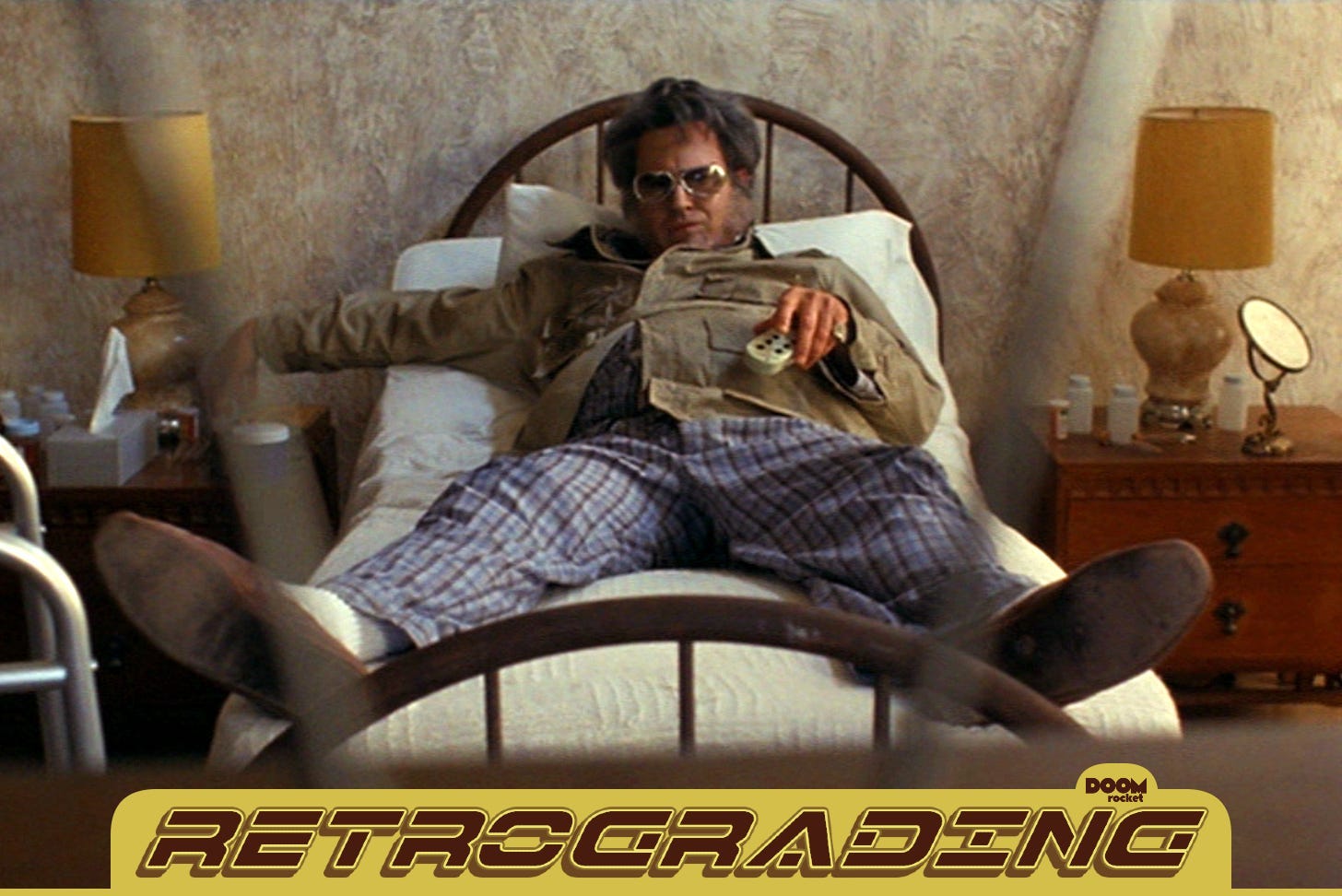
THE REVIEW: In most creature features, death arrives ahead of schedule, often cutting down a gaggle of teenagers whose lives have barely begun. In Bubba Ho-tep, the reaper is right on time. By the start of the film, Campbell’s elderly Elvis is well past his prime and living out his last days in Shady Rest Retirement Home. It’s an unsentimental space; the daughter of his deceased roommate is seen tossing a Purple Heart in the trash. Bedridden and hardly able to distinguish dreams from reality, time skitters past him in sharply edited flashes as the home’s yellowed wallpaper and harsh fluorescent lighting compound his woe — a lamentable tomb for a King buried beneath the weight of past mistakes.
Yet even when he’s just lying around, Campbell radiates charisma, infusing every near-death rattle with equal touches of misery and humor. His performance only partially retreats from the cartoonish physicality of the Evil Dead trilogy, though Campbell’s calibrations ultimately reveal a person behind the caricature of Elvis’s memory. Underneath sunglasses, fake mutton chops, and fantastic old-age makeup, his expertly controlled mugging still lands: be it an insouciant sneer, a hound dog leer, or tremulous regret, Campbell manages to ground the film’s sublime outrageousness. And once he’s out of bed and moving — with the help of a walker, natch — he blends Presley’s swagger with the cautious movements of an older man. This performance is magic.
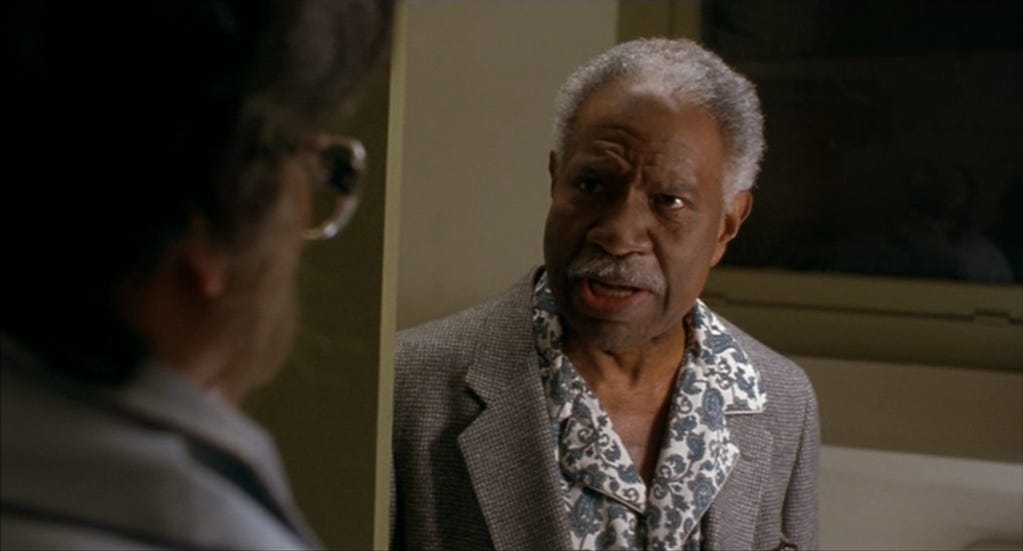
Campbell is joined by the renowned actor, director, and civil rights activist Ossie Davis, who brings dignity to an outlandish character — a quirky old-timer who insists he’s President John F. Kennedy, still alive but “dyed” Black. His room is a highlight of the film’s spare but stellar production design, complete with a red phone (just in case Moscow calls) and a model of the Texas School Book Depository. Together, these cultural titans confront a mummy feeding on the meager souls at Shady Rest, knowing its victims won’t be missed. Unfortunately, the titular Bubba Ho-Tep (stuntman Bob Ivy) isn’t much of a monster; it’s short on personality and isn’t very scary, although the gag about it writing bathroom graffiti in hieroglyphs is pretty good. Still, ‘Tep’s purpose works symbolically as one last shot for Elvis to redeem his soul before the final curtain falls.
Brian Tyler’s score features gorgeous, reverb-heavy guitar work, and the sound editing throughout is superlative (check out the pneumatic wheezing of an iron lung in an early scene). It almost makes up for the lack of actual Elvis songs. Yet the realities of budget filmmaking didn’t keep Coscarelli from wringing every drop of faux-Texan atmosphere from his production. And each supporting player does their part to prop up the verisimilitude, especially Ella Joyce as Elvis’ nurse, who eventually disappears from the story without explanation or even a fun death scene. The two bumbling, philosophizing undertakers could have wandered in from a production of Hamlet, and a cameo by Reggie Bannister (Phantasm) adds extra street cred.
Growing old is a slow, gnawing process, and fittingly, Coscarelli allows the story to unfold at a relaxed pace that encourages us to ponder how Elvis might have wound up in this wild situation. Is this all just the pathetic hallucinations of an Elvis impersonator named Sebastian Haff? The question of what defines us and whether it even matters looms over everything. Just as his film blurs the line between screwball comedy and horror, Coscarelli fuses fact and fiction into a vulgar, peculiar, bittersweet tribute to the struggles of aging in a culture obsessed with now. For that reason, and for the wonderful performances it gave us, Bubba Ho-tep stands the test of time.
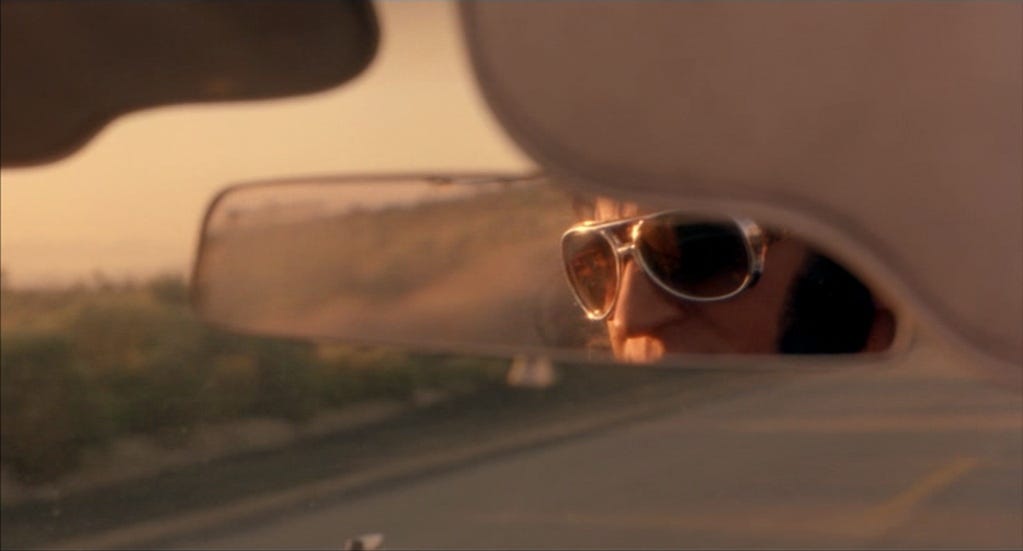
NOSTALGIA-FEST OR REPRESSED NIGHTMARE? Like a sock-hop in Hell, Bubba Ho-tep is a rockin’ good time.
RETROGRADE: B+
In light of his decades of hard work and all of the cinematic grooviness he’s given his fans, we here at DoomRocket would just like to say to Mr. Campbell… thank you. Thank you very much. — Matt.
 | A guest post by
|
Only Bruce could've brought Joe R. Lansdale's kooky masterpiece to live like this.